


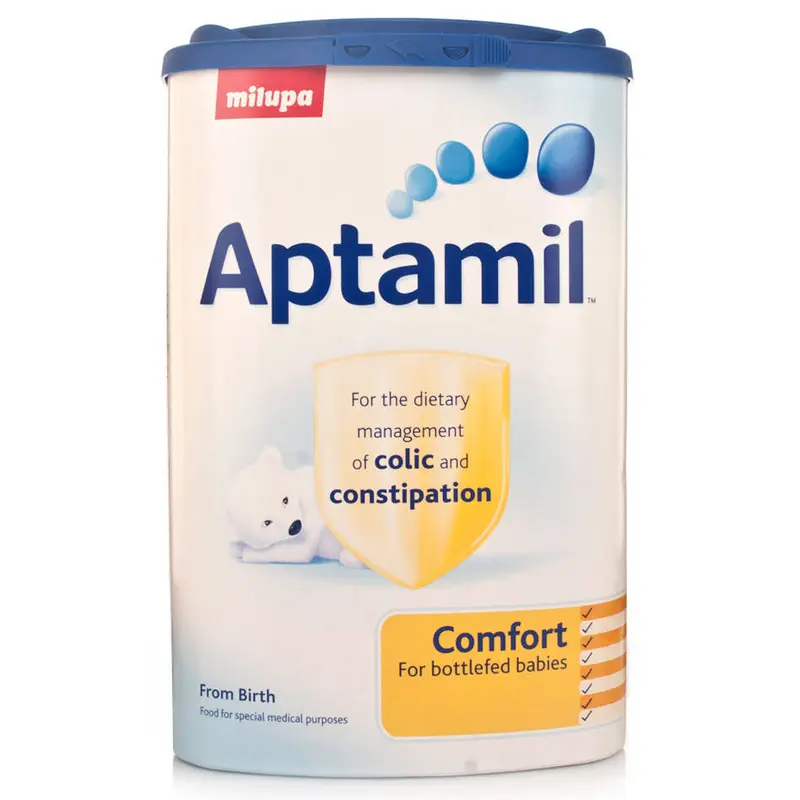
Aptamil Anti Reflux Milk Powder 0-12 Months (900g Tub):
Aptamil Anti-Reflux is a specially thickened formula, designed to help feeds stay down. Suitable from birth to 12 months.
How it works
Thicker foods are proven to help reduce the symptoms of reflux . Aptamil Anti-Reflux is specially formulated with carob bean gum so that the milk is thicker in consistency. It is clinically proven to be thicker on preparation than other anti-reflux formulas, and it also stays thicker in your baby’s stomach.
What are reflux and regurgitation?
Reflux occurs when the contents of the stomach move back into the oesophagus after feeding. Regurgitation (or posseting) means the stomach contents come up into your baby’s mouth. Find out more in our article.
More about Infant Reflux
It’s perfectly normal for a healthy baby to bring up a small amount of milk after feeding. This is known as posseting (sometimes ‘regurgitation’) and is common during their first year – it peaks at around 4-6 months and after 12 months it becomes less frequent or disappears entirely.
As long as your baby is showing no signs of discomfort and is putting on weight, there shouldn’t be a problem. But you should speak to your midwife or health visitor about reflux if they are vomiting regularly, bringing up a large amount of milk and seem to be in distress or discomfort while feeding. Reflux is a term that describes the movement of stomach contents (whether it’s milk and/or stomach acid) into the oesophagus, and can be quite uncomfortable.
What causes reflux?
Between the stomach and the oesophagus is a valve that stops food coming back up . In young babies this valve is not yet fully developed, so it may not work at the right time or it might not be strong enough to close off the stomach completely – so milk can trickle back up into the throat and occasionally out of the mouth.
If you’re concerned that your baby might have reflux, it’s best to get in touch with your midwife or health visitor. However, we listed some common symptoms to help you recognise if your baby is suffering from reflux and to help you discuss any problems with your midwife or health visitor:
- Constant or sudden crying (much like colic symptoms)
- Irritability and pain
- Poor sleep habits typically with frequent waking
- Arching their necks and back during or after eating
- Regurgitation or vomiting
- Wet burp or frequent hiccups
Remember to speak to your midwife or health visitor if you are concerned about your baby or you think there might be a problem with reflux.
What your midwife or health visitor can do to help:
If your baby is diagnosed with reflux, there are several things that your midwife or health visitor may suggest, such as adapting the way that you feed, hold and travel with your baby, as they can all have an effect on reflux. Feeding little and often might help your baby’s stomach from getting too full. While keeping them upright after a feed can help keep everything down (with a little assistance from gravity). It might also be suggested that you avoid dressing your baby in tight clothing around their stomach as this may have an effect on their stomach.
If you’re bottlefeeding, your midwife or health visitor might propose that you switch the formula you’re using to a formula made with a thickener such as corn starch or carob bean gum.



Reviews
There are no reviews yet.