
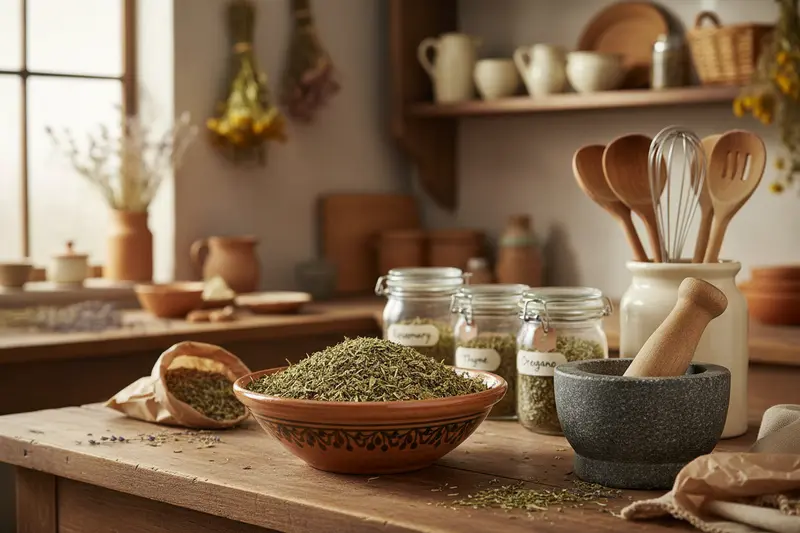

Wood Betony Herb (Stachys officinalis)
Wood Betony, botanically known as Stachys officinalis (formerly Betonica officinalis), is one of the most revered herbs in Anglo-Saxon and European folk medicine, historically described as a remedy for virtually every ailment. Modern phytochemical analysis has identified its key active constituents — iridoid glycosides, tannins, flavonoids, betaine, and stachydrine — which underpin its nervine, digestive, anti-inflammatory, and circulatory properties. Available in 50 g and 100 g sizes.
Key Benefits
- Nervine & anxiolytic — calms the nervous system; traditionally used for anxiety, stress, tension headaches, and insomnia
- Digestive tonic — bitter principles stimulate digestive secretions; relieves gas, bloating, and nervous indigestion
- Headache & migraine support — particularly effective for tension- and stress-related headaches; often combined with Skullcap or Vervain
- Circulatory & cardiac tonic — mild vasodilatory action supports healthy circulation and blood pressure balance
- Cognitive & mood support — traditionally used to “strengthen the head”; supports memory, mental clarity, and low mood
- Menstrual balance — eases dysmenorrhoea and supports emotional wellbeing during PMS
- Mild expectorant — historically used for coughs, bronchitis, and upper respiratory catarrh
Clinical Research & Evidence
- Anxiolytic & sedative activity: Iridoid glycosides and flavonoids in Stachys officinalis have demonstrated GABAergic modulation in preclinical studies, supporting its traditional use as a nervine and anxiolytic herb. Research reviewed in the Journal of Ethnopharmacology confirms the sedative and anxiolytic potential of Lamiaceae family iridoids.
- Anti-inflammatory properties: Stachydrine (proline betaine), a key alkaloid in Wood Betony, has been studied for its anti-inflammatory and cardioprotective effects. Research published in Phytomedicine demonstrated that stachydrine inhibits NF-κB activation and reduces TNF-α and IL-6 production in inflammatory models.
- Antioxidant activity: Flavonoid-rich fractions of Stachys officinalis have demonstrated significant DPPH radical scavenging activity in in vitro assays, attributed to luteolin, apigenin, and rosmarinic acid derivatives (Food Chemistry, 2011).
- Digestive & choleretic effects: Bitter iridoid glycosides in Wood Betony stimulate gastric acid and bile secretion, validating its traditional use as a digestive bitter in European pharmacopoeias, as reviewed in Fitoterapia.
- Cognitive support: Betaine and stachydrine have been investigated for neuroprotective properties, with studies in Neurochemistry International suggesting that betaine supplementation supports homocysteine metabolism and cognitive function, providing a mechanistic basis for Wood Betony’s traditional use in memory and mental clarity.
Common Uses
- Nervine and stress-relief herbal blends
- Tension headache and migraine support formulations
- Digestive bitters and gut comfort teas
- Cognitive and mood support protocols
- Menstrual comfort and PMS blends
- Respiratory and expectorant formulations
- Traditional European cleansing and tonic preparations
Suggested Use
- Herbal Tea / Infusion: 1–2 tsp dried herb steeped in boiling water for 10–15 minutes; drink 2–3 times daily
- Powder: ¼–½ tsp mixed into water, juice, or a smoothie once or twice daily
- Capsules: 300–500 mg, 1–2 times daily with food
- Tincture: 1–2 ml (20–40 drops), 2–3 times daily; often combined with Skullcap or Vervain for enhanced nervine effect
Contact us for guidance on your specific formulation or extract ratio.
Safety & Precautions
- Not recommended during pregnancy (uterine stimulant properties reported in traditional literature).
- Consult a healthcare professional before use if taking sedative medications or antihypertensives.
- Generally well-tolerated at recommended doses.
- Keep out of reach of children.
Reviews
There are no reviews yet.